

SEO measurement
How to measure organic lead generation
Measure organic lead generation by connecting relevant organic visits with valid inquiries and qualification outcomes. Define a lead consistently and distinguish successful submissions from clicks or form starts.
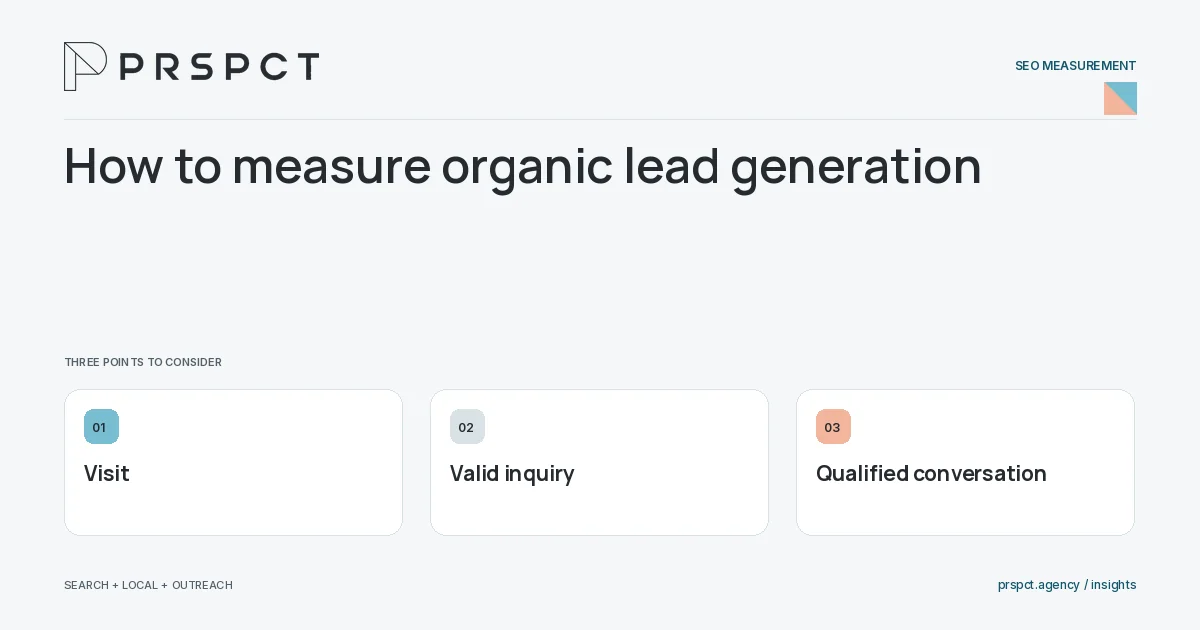
Traffic only describes the beginning of the path.
Define a valid inquiry
Exclude test submissions, duplicates, spam, and clearly unrelated requests using documented rules.
Verify event behavior
Check that a successful backend action corresponds to the intended analytics event. Inspect repeated submissions and failures.
Connect qualification
Record fit and sales status in a shared operational system, keeping personal information out of public analytics parameters.
A practical example
A fictional service site records 30 form events but only 18 valid inquiries after duplicates and tests are removed. The owner uses the valid count for the lead report.
A decision checkpoint
Reconciliation does not require every system to match exactly. It requires understanding what each count includes and investigating material discrepancies. For example, failed sends, duplicate events, and spam inquiries can explain differences between analytics activity and valid requests recorded by the business.
A mistake to avoid
Counting every button click as a lead inflates performance and obscures delivery failures.
How to assess the result
Review valid and qualified inquiry counts by source with the same counting rules each period.
Put the work in context
Measurement is useful when it helps the business choose its next action. Separate search exposure, website behavior, valid inquiries, and sales outcomes; each describes a different part of the journey.
Keep metric definitions stable and record important site changes. Compare similar periods where possible, and explain data gaps instead of presenting a partial dashboard as a complete account of customer behavior.
A common question
Can analytics prove every lead came from SEO?
Not always. Attribution gaps and multi-touch journeys require cautious interpretation and operational context.
Related reading
- SEO reporting for small businesses: what to measure
- UTM naming conventions for small-business marketing
- How to investigate a sudden drop in organic traffic
- What is answer engine optimization? A practical AEO guide
Discuss your next priority
PRSPCT helps businesses connect search visibility, local presence, and email outreach. Email josh@prspct.agency to discuss your goals.
References and further reading
The references below support relevant platform definitions and requirements. The planning workflows and labeled examples are PRSPCT editorial guidance.