

Answer engine optimization
Structured data for blog posts: what to include
Blog structured data should accurately identify the article, publisher, image, page, and relevant dates. Use a consistent JSON-LD implementation and avoid invented authors, credentials, reviews, or publication history.
Schema describes content; it cannot supply missing evidence.
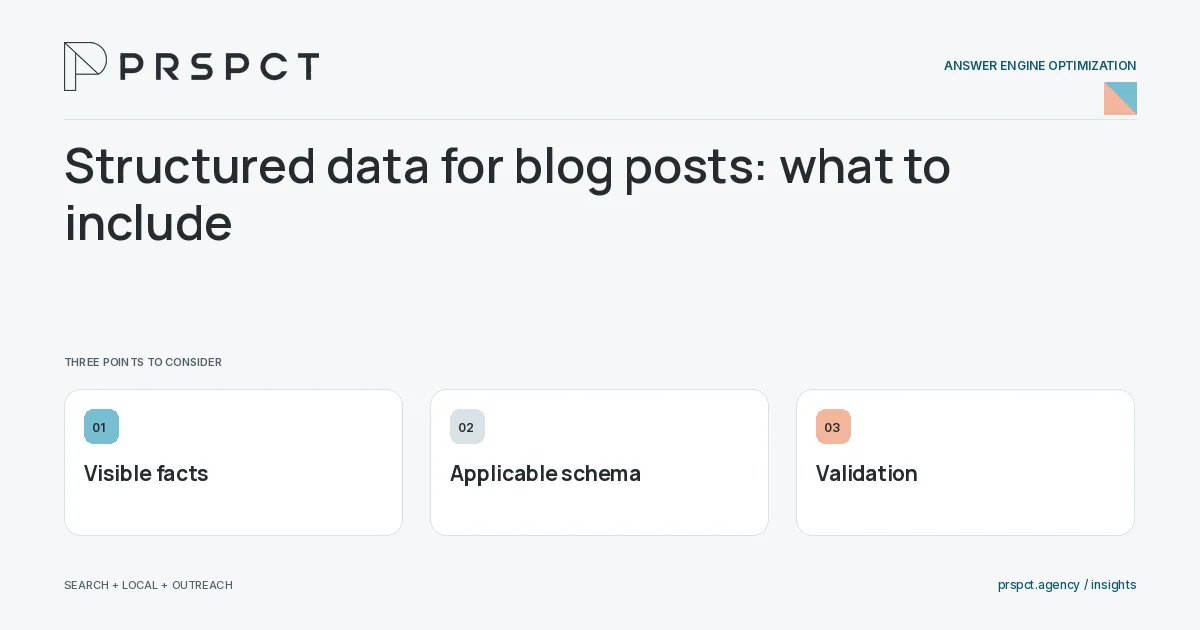
Match visible information
Keep headline, description, byline, images, and dates consistent with the published page.
Use applicable types
BlogPosting and breadcrumb information can describe a normal business article and its navigation context.
Validate after rendering
Check syntax and supported feature expectations, then inspect the live page. Avoid duplicate plugin and custom graphs describing conflicting facts.
A practical example
A fictional import package leaves publication dates unset until release. The site then adds genuine dates to both visible content and JSON-LD instead of backdating every article.
A decision checkpoint
Keep the publisher and author records consistent across the site. An organization byline can be accurate without inventing an individual expert. If a real named author is later added, update visible attribution and structured data together using verified information rather than treating authorship as a decorative ranking field.
A mistake to avoid
Using fabricated author expertise to make content appear authoritative misrepresents the source.
How to assess the result
Check representative rendered pages with appropriate validators. Syntactic success does not guarantee a search enhancement.
Put the work in context
Answer engine optimization is a useful label for making answers clear and supportable, but it does not create a separate entitlement to visibility. Prioritize the reader’s question, accessible content, and accurate evidence.
Keep essential explanations in live page text. Use headings, examples, and tables when they improve understanding, and make structured data describe the visible page rather than adding claims that readers cannot verify.
A common question
Does valid schema guarantee rich results?
No. Eligibility, policies, content, and search presentation decisions still apply.
Related reading
- What is answer engine optimization? A practical AEO guide
- How to use comparison tables in answer-focused content
- AEO content audit checklist for service businesses
- Generative engine optimization: a practical guide for businesses
Discuss your next priority
PRSPCT helps businesses connect search visibility, local presence, and email outreach. Email josh@prspct.agency to discuss your goals.
References and further reading
The references below support relevant platform definitions and requirements. The planning workflows and labeled examples are PRSPCT editorial guidance.