

Email segmentation
Tags versus segments in an email platform
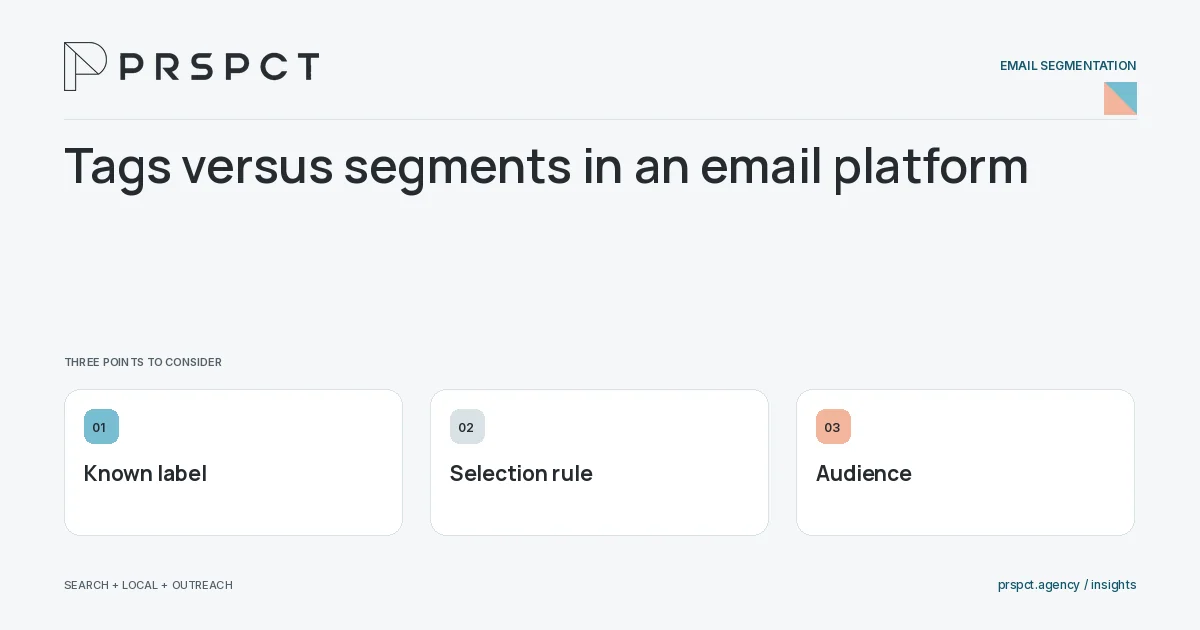
Tags label known information, while segments select contacts meeting defined conditions. The exact implementation varies by platform, so document how labels and rules support the intended audience.
A label is not automatically permission or sales readiness.
Define label meaning
Use names with an owner and clear application rule.
Build selection logic
Combine appropriate fields and exclusions to identify the campaign audience.
Inspect changes
Check how imports and automations add or remove labels over time.
A practical example
A fictional team tags a resource source, then uses a segment that also checks subscription status. The source tag alone does not enroll every contact into marketing.
A decision checkpoint
Give labels an expiration or review rule when their meaning is temporary. A tag for a past event can remain useful as history, but it should not imply current interest forever. Separate historical provenance from present campaign eligibility to avoid stale assumptions.
A mistake to avoid
Uncontrolled tag creation can produce several names for the same concept.
How to assess the result
Audit duplicate labels, unexplained membership, and suppression behavior.
Put the work in context
Segmentation makes a message relevant to a defined audience. Start with information people provide and legitimate business context; avoid sensitive assumptions or treating uncertain activity as a complete picture of intent.
Write segment rules in plain language and inspect a sample before sending. Apply preferences and exclusions consistently, and keep subscriber audiences separate from outbound lists and active sales conversations.
A common question
Are tags and segments identical in every tool?
No. Check the platform’s current definitions and test your actual workflow.
Related reading
- Email segmentation for small businesses: start with useful groups
- Email segmentation for a small subscriber list
- Segment email campaigns by service interest
- Email deliverability checklist for small businesses
Discuss your next priority
PRSPCT helps businesses connect search visibility, local presence, and email outreach. Email josh@prspct.agency to discuss your goals.
References and further reading
The references below support relevant platform definitions and requirements. The planning workflows and labeled examples are PRSPCT editorial guidance.