

Reviews and reputation
What to do about a suspicious or fake business review
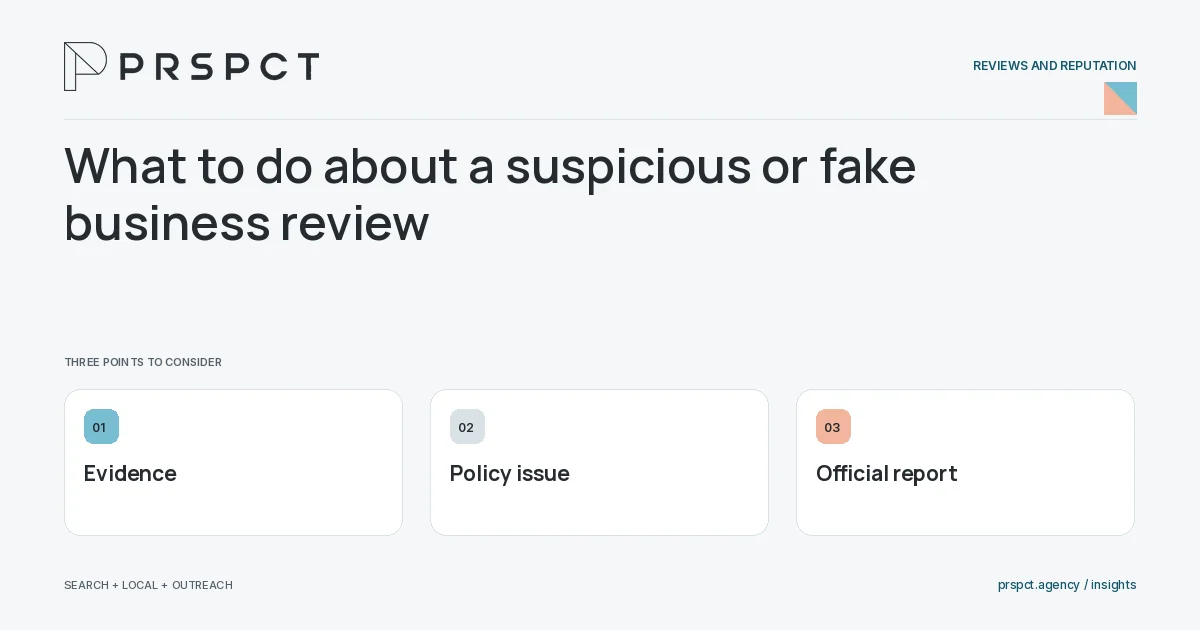
When a review appears suspicious, preserve evidence, compare it with the platform’s policies, and use the legitimate reporting process. Do not assume that an unfamiliar name or negative opinion proves the review is fake.
The platform decides whether its removal rules apply.
Check the record
Look for relevant interaction evidence without exposing personal details publicly.
Identify a policy issue
Describe the specific concern rather than simply saying the rating is unfair.
Report and monitor
Use the current official route and keep a record. Respond cautiously if a public reply is appropriate.
A practical example
A fictional business receives promotional spam presented as a review. It documents the unrelated solicitation and reports that specific issue instead of attacking the reviewer.
A decision checkpoint
An unfamiliar name may belong to a legitimate customer, employee of a client organization, or someone using a public alias. Check available records carefully and avoid accusing the person of fraud without support. Report a specific policy concern when the evidence actually indicates one.
A mistake to avoid
Buying positive reviews to offset a suspicious review manufactures a second problem.
How to assess the result
Track reports, platform responses, and recurring abuse patterns without promising removal.
Put the work in context
Customer feedback is evidence of individual experiences, not material to manufacture. Build a consistent process for genuine requests, thoughtful responses, and operational learning while following each platform’s rules.
Assign a response owner and an escalation path. Protect personal details in public replies, preserve truthful records, and separate service recovery from any request for a public review.
A common question
Can a business delete reviews it dislikes?
No. Disagreement alone does not establish a policy violation or a right to removal.
Related reading
- Online reputation management for small businesses
- How to use customer testimonials on a service website
- Service-area pages: when they deserve separate URLs
Discuss your next priority
PRSPCT helps businesses connect search visibility, local presence, and email outreach. Email josh@prspct.agency to discuss your goals.
References and further reading
The references below support relevant platform definitions and requirements. The planning workflows and labeled examples are PRSPCT editorial guidance.