

Answer engine optimization
How to write a direct answer that still explains the details
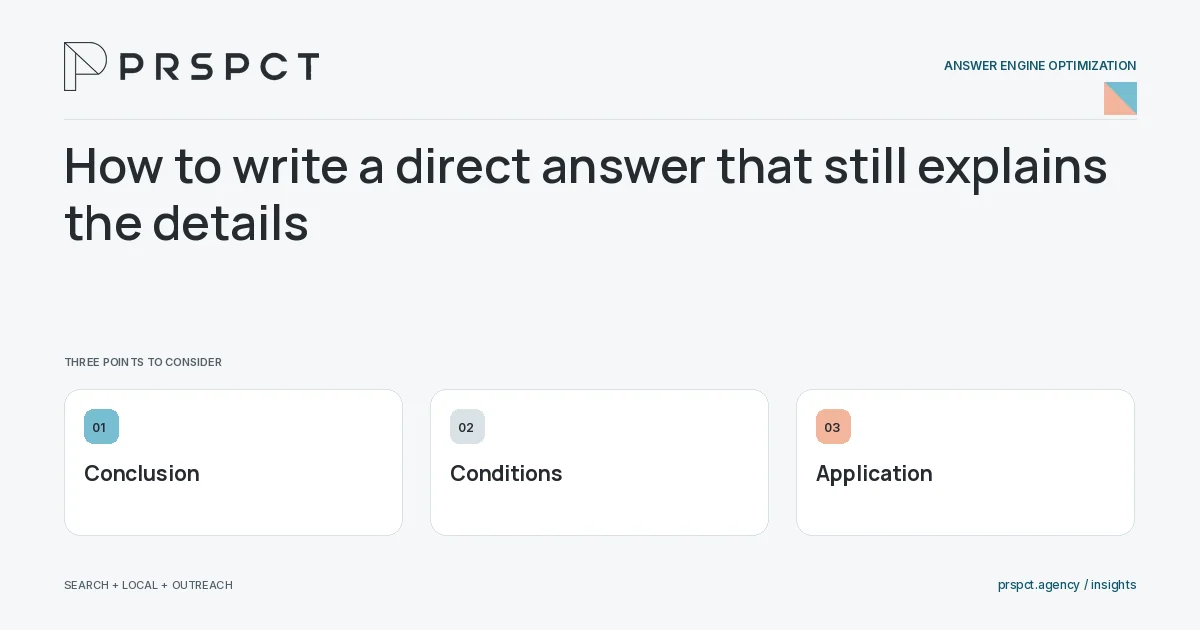
A direct answer states the conclusion or definition early, then explains conditions, examples, and limitations. It should remain accurate when read alone without oversimplifying a decision that depends on context.
Clarity is useful to readers even when no search feature quotes the answer.
Name the subject
Use explicit nouns and define the concept rather than starting with an unexplained pronoun or slogan.
State the boundary
Include the main condition that changes the answer. Avoid a universal claim when the choice depends on business context.
Expand with application
Show how to use the answer and when a different approach may fit better.
A practical example
Instead of “Always send weekly,” a fictional newsletter guide says frequency should match subscriber expectations and content capacity, then explains how to test a sustainable cadence.
A decision checkpoint
Read the opening independently from the headline. If it starts with “it depends” or an unexplained pronoun, the subject may be unclear to someone arriving at that section. State the topic and main condition directly, then explain the choices that make the answer conditional.
A mistake to avoid
Writing only a short answer can omit the tradeoffs a buyer needs.
How to assess the result
Ask whether a reader can identify the answer quickly and apply it correctly after reading the full section.
Put the work in context
Answer engine optimization is a useful label for making answers clear and supportable, but it does not create a separate entitlement to visibility. Prioritize the reader’s question, accessible content, and accurate evidence.
Keep essential explanations in live page text. Use headings, examples, and tables when they improve understanding, and make structured data describe the visible page rather than adding claims that readers cannot verify.
A common question
Must every answer be a fixed length?
No. Use enough detail to remain accurate; there is no universal paragraph size that guarantees selection.
Related reading
- What is answer engine optimization? A practical AEO guide
- Question-based headings: when they help business content
- How to use comparison tables in answer-focused content
- Generative engine optimization: a practical guide for businesses
Discuss your next priority
PRSPCT helps businesses connect search visibility, local presence, and email outreach. Email josh@prspct.agency to discuss your goals.
References and further reading
The references below support relevant platform definitions and requirements. The planning workflows and labeled examples are PRSPCT editorial guidance.