

Technical SEO
JavaScript SEO checks for a new business website
A JavaScript website should deliver discoverable links, visible main content, accurate metadata, and consistent routing. Inspect what is actually rendered and returned rather than assuming a browser preview proves crawler access.
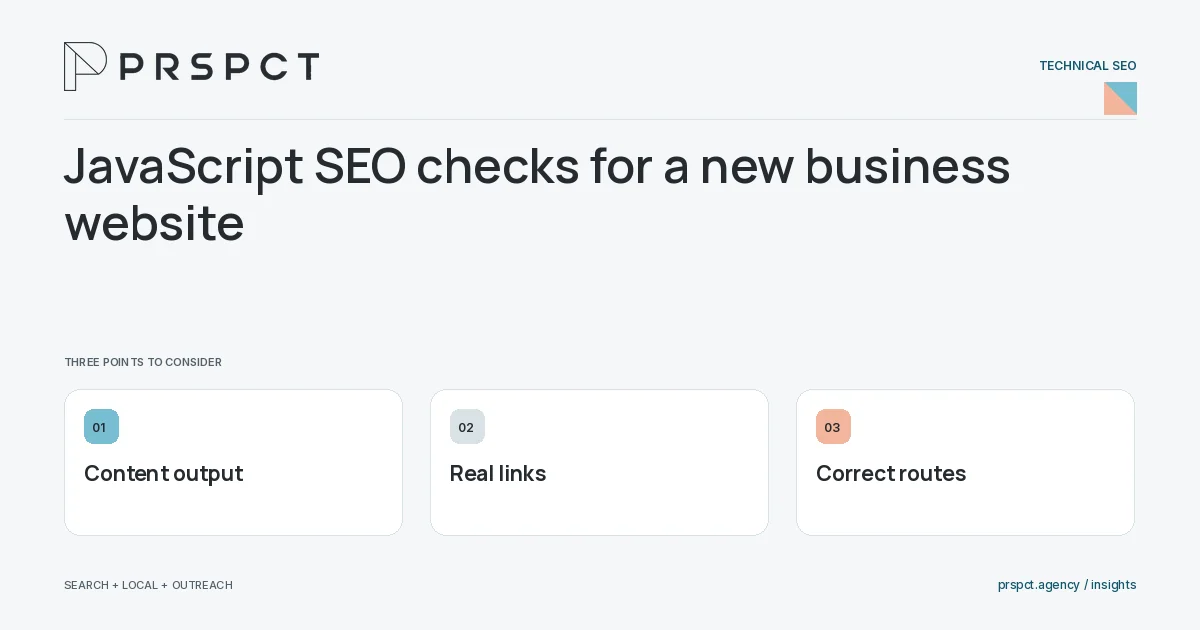
Framework defaults do not remove the need to test production pages.
Inspect page output
Check titles, headings, main text, status codes, and canonical tags on representative routes.
Use real links
Ensure navigation and contextual destinations use crawlable anchors with valid URLs.
Test failure states
Verify missing pages, loading behavior, and client-side navigation. Important content should not depend on an avoidable interaction.
A practical example
A fictional site shows articles only after clicking a category filter. The team adds discoverable article links and ensures each article route has its own rendered content.
A decision checkpoint
Inspect what happens when a route is opened directly in a fresh session. Client-side navigation can hide missing server routes, incorrect status codes, or metadata inherited from another page. Test the same destination through navigation and direct loading so both customer and discovery paths are covered.
A mistake to avoid
A page that looks correct after several clicks may still hide important discovery paths.
How to assess the result
Use rendered inspection and direct URL loads, then compare key content with the intended published article.
Put the work in context
Technical SEO makes useful content accessible and consistently identifiable. Diagnose the specific failure before applying a sitewide change: crawl access, indexing signals, rendering, redirects, and page experience solve different problems.
Test representative URLs from each page template after changes. Keep staging and production settings separate, and confirm that the published HTML, status code, canonical URL, and sitemap describe the same intended destination.
A common question
Is server rendering enough by itself?
No. It helps deliver content, but routing, metadata, links, and status behavior still need verification.
Related reading
- Technical SEO checklist for a small website
- Duplicate content on small websites: diagnose before merging
- Why a new blog post is not indexed: a diagnostic checklist
- Content marketing for small businesses: build a useful library
Discuss your next priority
PRSPCT helps businesses connect search visibility, local presence, and email outreach. Email josh@prspct.agency to discuss your goals.
References and further reading
The references below support relevant platform definitions and requirements. The planning workflows and labeled examples are PRSPCT editorial guidance.