

On-page SEO
SEO content briefs: what to give a writer before drafting
An SEO content brief defines the reader task, primary intent, boundaries, evidence, structure, and next step. It should guide an original answer without prescribing repetitive keyword placement.
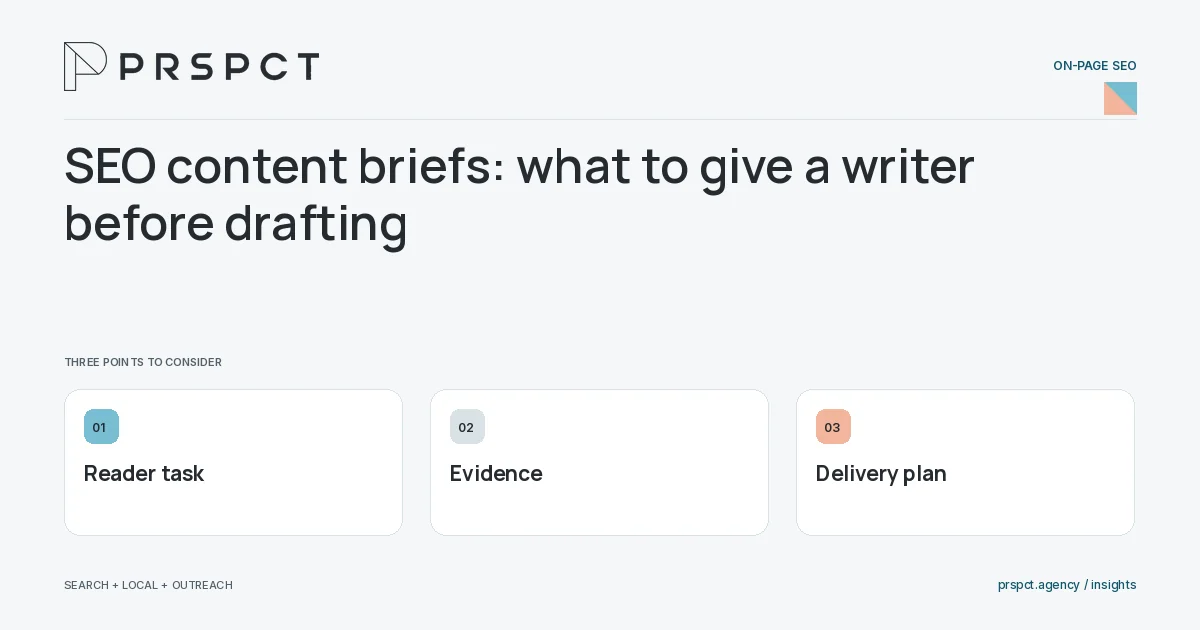
A brief prevents overlap before the writer invests in a full draft.
Define the answer
Write the question, intended reader, and outcome. List related questions that belong on other pages.
Specify useful evidence
Identify verified facts, source documents, illustrative examples, and claims requiring approval. Leave unknown business details out.
Plan delivery
Set the preferred URL, metadata direction, internal links, visual purpose, and review responsibilities.
A practical example
A fictional brief for a quote-form guide asks for field-selection tradeoffs and a mobile test, while excluding CRM automation details covered elsewhere. The writer has a clear boundary and useful deliverables.
A decision checkpoint
A writer also needs to know what cannot be claimed. List unapproved statistics, missing business details, and examples that must remain hypothetical. This avoids later pressure to fill evidence gaps with confident wording and keeps editorial approval focused on a concrete, supportable answer.
A mistake to avoid
A brief consisting only of a keyword list encourages repetition rather than a coherent explanation.
How to assess the result
Review the draft against reader outcome, accuracy, and page boundaries before checking cosmetic metadata details.
Put the work in context
On-page SEO should make a page easier to identify, understand, and use. Align titles, headings, copy, images, and internal links with the same reader task rather than optimizing each element in isolation.
Before changing a page, write its purpose in one sentence. Use that sentence to check whether every major section contributes to the answer and whether the next step follows naturally from the information provided.
A common question
Should a brief prescribe a minimum word count?
Use scope and reader needs first. A length range can help planning, but padding does not improve usefulness.
Related reading
- On-page SEO checklist for a small-business service page
- H1, H2, and H3 headings: a practical website structure
- Technical SEO checklist for a small website
Discuss your next priority
PRSPCT helps businesses connect search visibility, local presence, and email outreach. Email josh@prspct.agency to discuss your goals.
References and further reading
The references below support relevant platform definitions and requirements. The planning workflows and labeled examples are PRSPCT editorial guidance.