

Keyword research
Low-volume keywords: when they are worth targeting
A low-volume keyword can be worthwhile when it represents a valuable customer decision, supports a service, or answers a recurring sales question. Assess usefulness and commercial relevance alongside uncertain demand estimates.
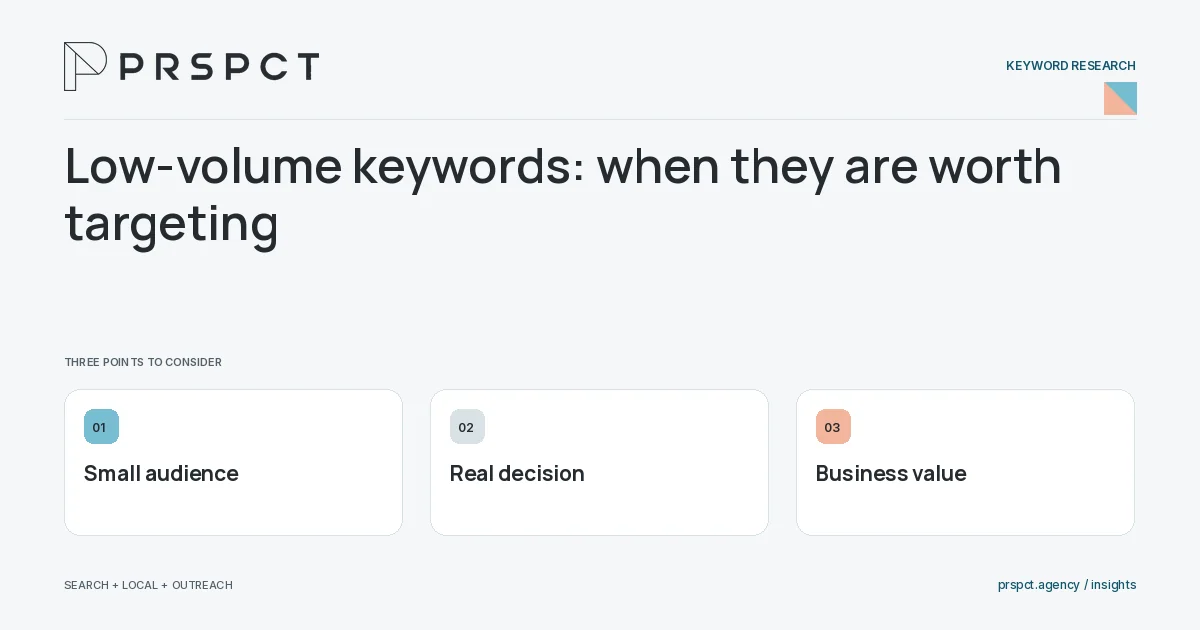
A tool may miss narrow demand, especially for specialized services.
Check buyer relevance
Ask whether a person with this question could reasonably need the service. Reject irrelevant topics even when easy.
Estimate content value
Consider sales enablement, preparation, and internal-link value in addition to possible visits.
Keep the answer proportionate
Use a section on an existing page when the question is small. Create a full guide only when the task needs one.
A practical example
A fictional industrial cleaner publishes a checklist for preparing a small warehouse for a floor assessment. The topic is narrow, but the resource helps suitable prospects prepare and makes the consultation more productive.
A decision checkpoint
A low-volume resource can earn its place through repeated sales use. Record when staff send it and what question it resolves. That evidence is different from organic demand, but it helps the business evaluate whether maintaining the page is worthwhile even when visitor counts remain modest.
A mistake to avoid
Publishing hundreds of tiny pages for phrases with no distinct decision creates fragmentation.
How to assess the result
Record qualified inquiries and actual sales use. A small useful audience may matter more than an impressive visitor total.
Put the work in context
Keyword research is most useful when it explains a customer decision. A short phrase can represent several different needs, while a longer query may identify a specific problem that the business can answer well.
Keep one primary intent for each planned page. Record close variants together, inspect the current results, and assign the topic to an existing URL whenever that page already serves the same decision.
A common question
Does zero reported volume mean nobody searches?
No. It can mean the tool lacks enough measurable data. Verify customer usefulness rather than assuming demand exists or does not exist.
Related reading
- Keyword research for small businesses: start with buyer intent
- How to find content opportunities from competitor websites
- How to group keywords without creating competing blog posts
- On-page SEO checklist for a small-business service page
Discuss your next priority
PRSPCT helps businesses connect search visibility, local presence, and email outreach. Email josh@prspct.agency to discuss your goals.
References and further reading
The references below support relevant platform definitions and requirements. The planning workflows and labeled examples are PRSPCT editorial guidance.